Security first in SaaS design
Step 1: Multi-Layered Encryption Architecture
Security at Starks starts with AES-256 encryption at rest and TLS 1.3 in transit. However, we go further by implementing a decentralized Key Management System (KMS), where encryption keys are rotated hourly and stored in hardware security modules (HSM). This ensures that even in the event of a breach, the data remains a useless cipher to unauthorized actors.
Step 2: Immutable Cryptographic Audit Trails
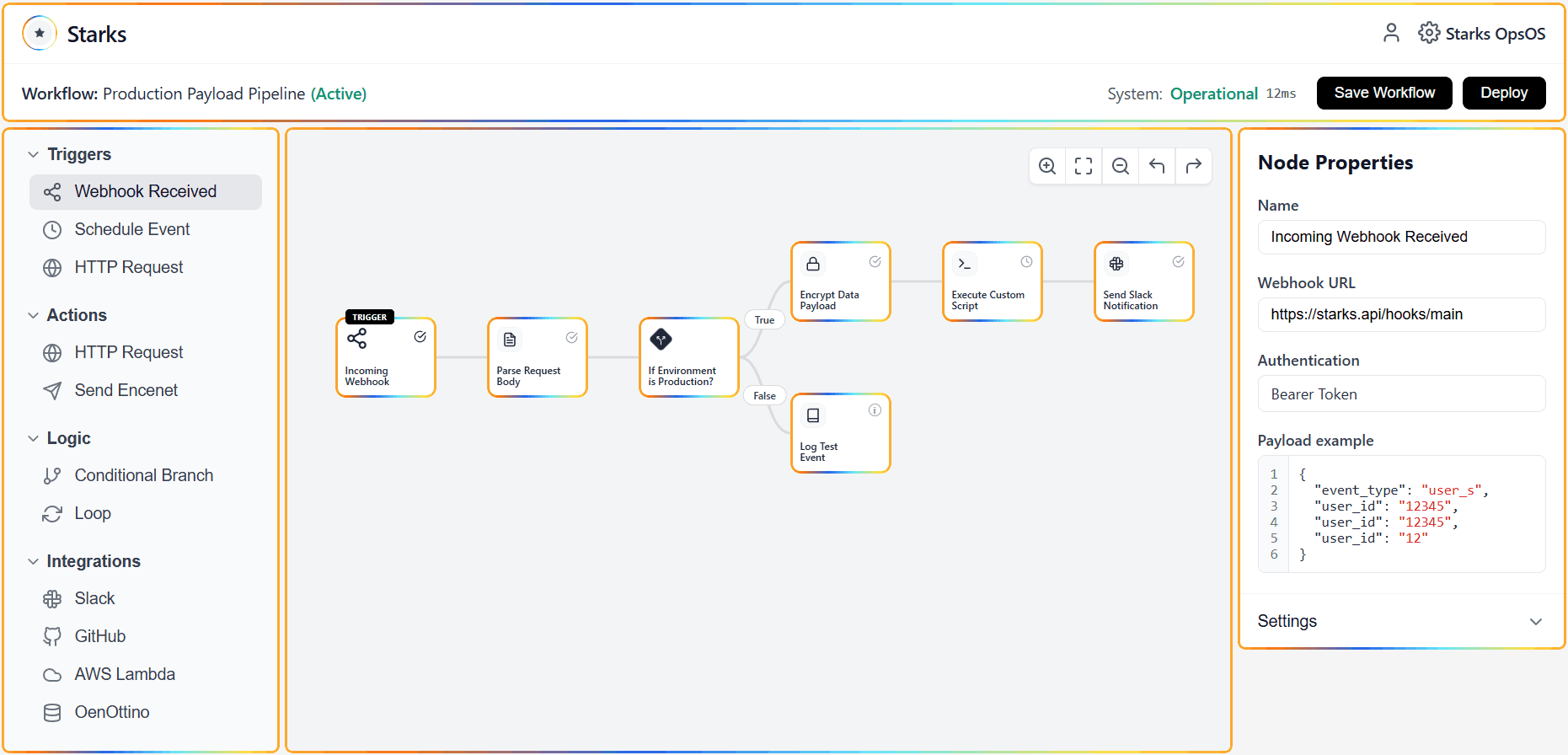
Transparency is the cornerstone of trust. Every action within the Starks OpsOS is recorded in an immutable, append-only ledger. Each entry is cryptographically signed, creating a tamper-proof history of every API call, user login, and workflow modification. This level of detail is essential for meeting the rigorous requirements of SOC2 Type II, GDPR, and HIPAA.
Step 3: Granular Zero-Trust Access
We replace traditional "all-or-nothing" permissions with a strict Zero-Trust model. Using Attribute-Based Access Control (ABAC), administrators can define hyper-specific roles. Permissions can be restricted by IP range, time of day, and even specific workflow nodes, ensuring that every actor—human or machine—has only the exact level of access required.
The Governance Advantage:
By embedding security into the core design rather than treating it as an afterthought, Starks empowers CTOs to deploy complex automations in highly regulated industries with total confidence. Your infrastructure becomes your strongest defense.
See More
Expert advice on scaling operations and engineering workflows with absolute clarity.